
WORKING TOGETHER
EUCARE AS A PARTNER FOR AUTHORISED INTERMEDIARIES & MANAGING GENERAL AGENTS (MGA)
EUCARE cooperates with authorised insurance intermediaries & managing general agents in European countries to offer customised insurance offerings to their customers. In partnering up with insurance intermediaries that put their customers first, EUCARE ensures that its insured are treated the way they deserve.
EUCARE provides authorised intermediaries & MGAs with a solid insurance partner as a risk carrier for their insurance offerings. Insurance intermediaries seeking a risk carrier for insurance portfolios (non-life), may refer their proposal to the contact persons below for further information.
EUCARE provides authorised intermediaries & MGAs with a solid insurance partner as a risk carrier for their insurance offerings. Insurance intermediaries seeking a risk carrier for insurance portfolios (non-life), may refer their proposal to the contact persons below for further information.

The Netherlands
Other Countries
PROTECTED CELL COMPANIES (PCC) & OPPORTUNITIES
A PCC is an ordinary limited liability company that has the capability of creating different segregated cells within itself. Although the PCC as a whole is considered as one company, each individual cell can have a different shareholding structure to the core and the other cells.
The governance of the PCC (i.e. the Board of Directors, Solvency II and other key functions) are shared between all the cells and are centrally managed by the PCC’s core, hence leading to economies of scale being achieved. The individual cells may also utilize the other resources and facilities of the PCC management (such as reinsurance connections, administration, information technology etc). In this way, the cell owners may benefit from the know-how of the PCC in running insurance company operations.
The capital requirement for each cell would not be subject to the Minimum Capital Requirement floor of a fully-fledged insurance company and normally only the notional solvency capital requirement applies, based on the specific portfolio of the cell. The minimum capital requirements (MCR) applicable would already be covered by the PCC’s own capital. Notwithstanding the segregation of the individual cells within a PCC, the core remains responsible for liabilities of all the cells, should the segregated own funds of any cell not suffice to cover its solvency requirements.
The profits, assets and liabilities of each cell remain ring-fenced from the activities of all other cells and from the assets of the company itself. Therefore, the funds of one cell may not be used to cover any shortfalls in capital or for the activities of another cell. Furthermore, such funds would be protected at law from any creditors of other cells and of the core.
The cell set-up is therefore particularly suited for hosting portfolios which are not big enough to justify the capital investment required to cover the minimum capital floor (MCR) for a full insurance company licence. Furthermore, an insurance cell also works as an enabler for start-ups and insurtech projects, as the model allows the cell promoters to become risk takers but at the same time be able to focus on their core activities and the cell’s growth.
The governance of the PCC (i.e. the Board of Directors, Solvency II and other key functions) are shared between all the cells and are centrally managed by the PCC’s core, hence leading to economies of scale being achieved. The individual cells may also utilize the other resources and facilities of the PCC management (such as reinsurance connections, administration, information technology etc). In this way, the cell owners may benefit from the know-how of the PCC in running insurance company operations.
The capital requirement for each cell would not be subject to the Minimum Capital Requirement floor of a fully-fledged insurance company and normally only the notional solvency capital requirement applies, based on the specific portfolio of the cell. The minimum capital requirements (MCR) applicable would already be covered by the PCC’s own capital. Notwithstanding the segregation of the individual cells within a PCC, the core remains responsible for liabilities of all the cells, should the segregated own funds of any cell not suffice to cover its solvency requirements.
The profits, assets and liabilities of each cell remain ring-fenced from the activities of all other cells and from the assets of the company itself. Therefore, the funds of one cell may not be used to cover any shortfalls in capital or for the activities of another cell. Furthermore, such funds would be protected at law from any creditors of other cells and of the core.
The cell set-up is therefore particularly suited for hosting portfolios which are not big enough to justify the capital investment required to cover the minimum capital floor (MCR) for a full insurance company licence. Furthermore, an insurance cell also works as an enabler for start-ups and insurtech projects, as the model allows the cell promoters to become risk takers but at the same time be able to focus on their core activities and the cell’s growth.
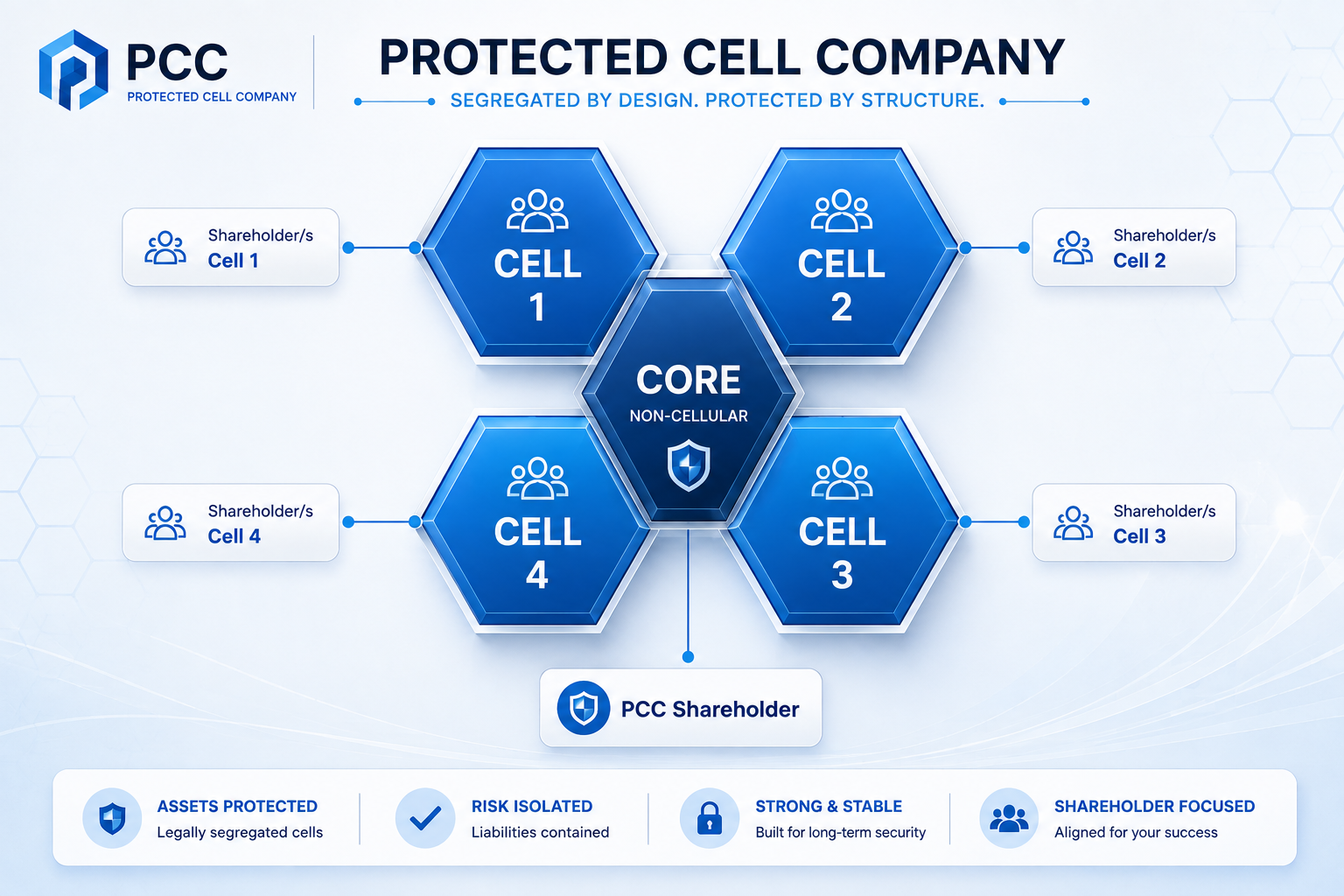
How does an insurance cell operate?
Overall, an insurance cell operates in a very similar manner to a normal insurance company. A Cell Committee normally oversees the cell’s operations on behalf of the PCC’s board of directors. Such a committee would consist of representatives of both the PCC and the cell’s shareholders. The cell can then have its own management structures and underwriting/claims functions, or it can share such resources with the PCC. The oversight by the PCC over the cells remains one which is at arms’ length, with the sole and primary scope of avoiding exposure of the core’s capital to each cell’s operations.
Examples of ventures suited for an insurance cell:
01.
An Insurance Intermediary wishing to be able to participate in the underwriting profit of its portfolios and retain more control of its products by becoming a risk-carrier.
02.
A new insurance start-up which needs time to build a portfolio over time without being subject to heavy capital requirements.
03.
Insurtech Company – requiring support by the PCC’s structures on the governance of the venture, to enable proper focus on the IT development and product marketing/distribution.
04.
Insurance partnerships – small to medium sized insurance undertakings who wish to partner-up with other operators in the insurance market to develop new portfolio or explore new markets.

